

A slip, trip, or fall on business property can turn a routine errand into a medical bill nightmare, and figuring out who foots the cost is rarely straightforward. Property owners, insurers, tenants, and even equipment vendors can all share a piece of the liability puzzle depending on what caused the injury. Understanding the basics of premises liability before an accident happens puts you in a far stronger position if you ever need to pursue compensation.
This guide breaks down the key factors that determine financial responsibility when someone gets hurt on commercial property.
Understanding Premises Liability Basics
Premises liability is the legal principle that holds property owners and operators responsible for injuries that occur due to unsafe conditions on their land or inside their building. This covers a wide range of incidents: slip-and-falls from wet floors, poor lighting in stairwells, falling merchandise, broken handrails, icy parking lots, and even inadequate security that leads to an assault. Because business owners invite the public onto their premises, courts generally expect them to maintain a reasonably safe environment and to address hazards within a sensible timeframe. This doesn’t mean every injury automatically triggers a payout.
The injured party generally must show the owner knew or should have known about a hazard and failed to fix it — this is often called “actual or constructive notice.” For example, a spill that sat unattended for 45 minutes with no warning sign is very different from one that happened 30 seconds before someone slipped; the former suggests negligence, while the latter may not. Courts also look at whether the visitor was legally on the property, since customers, vendors, and trespassers are owed different levels of care. Invitees, such as paying customers or delivery drivers, are owed the highest duty of care, including regular inspections for hazards. Licensees, like social guests or someone stopping in for a non-business reason, are owed a lesser duty, while trespassers are typically owed only the duty not to cause intentional harm, with some exceptions for children drawn to dangerous conditions like pools or construction equipment.
Premises liability rests on the idea that property owners owe a “duty of care” to people who enter their space, but how that duty is defined depends heavily on who’s walking through the door. Most states classify visitors as invitees, licensees, or trespassers, and each category comes with a different standard of protection. A customer in a retail store is typically owed the highest duty of care, while someone trespassing after hours is owed very little, if any. The specific duty of care owed can also shift based on local statutes, the type of business, and the nature of the hazard involved. A grocery store with a wet floor is judged differently than a construction site with exposed wiring, even though both fall under the same broad legal umbrella.
In the grocery store scenario, courts often ask how long the hazard existed and whether staff had a reasonable chance to notice and address it before someone got hurt. Construction sites and industrial properties face a different analysis entirely, often involving OSHA regulations, signage requirements, and whether proper barriers were in place to prevent access to dangerous areas. A missing warning sign or an unlocked gate near heavy machinery can carry more legal weight than a few minutes’ delay in mopping up a spill.
The hazard type also affects what counts as “reasonable” time to fix a problem — a loose handrail might need repair within days, while a gas leak demands immediate action. Knowing these distinctions early helps injured parties and business owners alike understand what evidence will matter most. Surveillance footage, maintenance logs, incident reports, and employee witness statements all play different roles depending on whether the case hinges on visitor status, hazard type, or how quickly a business responded once a danger was identified.
Determining Fault After a Slip or Fall Incident
When someone falls on a business property, the first question insurers ask is whether the hazard was foreseeable and whether reasonable steps were taken to prevent it. Spilled liquids, uneven flooring, poor lighting, and missing warning signs are among the most common contributing factors investigators look for. Documentation matters enormously here, so photos, witness statements, and incident reports can make or break a claim.
Many injured visitors choose to consult the best slip and fall attorney they can find before speaking with an insurance adjuster, since early statements can unintentionally weaken a claim. An experienced attorney knows how to gather surveillance footage, maintenance logs, and employee schedules before that evidence disappears. This kind of early legal guidance often determines whether a claim settles fairly or gets dismissed.
- Wet floors without visible warning signage
- Cracked sidewalks or parking lot potholes
- Loose carpeting or uneven flooring transitions
- Inadequate lighting in stairwells or hallways
- Broken handrails or missing safety equipment
Equipment and Maintenance Failures That Lead to Injury
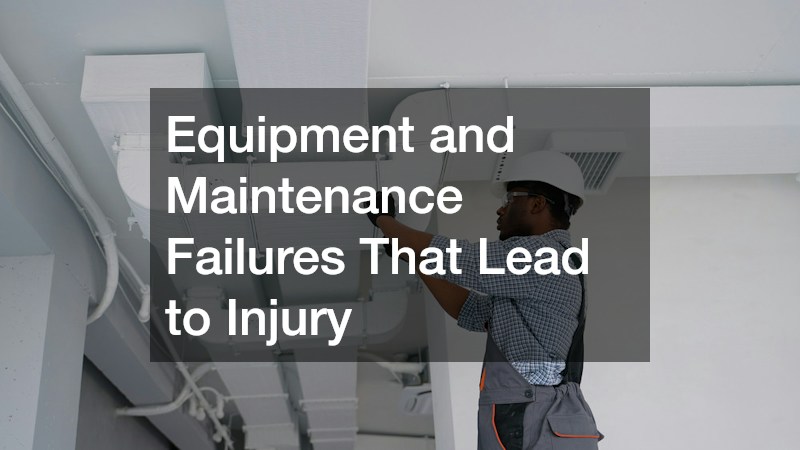
Not every business injury comes from a puddle or a loose rug. Mechanical failures in heating and cooling systems, outdated electrical panels, or improperly serviced machinery can cause burns, falls, or respiratory issues. When a business relies on outside vendors for upkeep, liability can sometimes shift toward the contractor if negligent repairs or installations caused the hazard.
For example, commercial HVAC contractors are responsible for ensuring rooftop units, ventilation systems, and exhaust components are installed and maintained to code. If a poorly secured unit falls or a malfunctioning system releases carbon monoxide into a workspace, the contractor’s insurance may bear some or all of the financial responsibility rather than the property owner alone. This is why thorough contracts and maintenance records are so important for every commercial property.
Industrial and Outdoor Equipment Hazards on Commercial Land
Businesses that operate warehouses, farms, or construction yards often store heavy equipment and raw materials outdoors, which introduces an entirely different category of injury risk. Sharp edges, unsecured loads, and improperly stored machinery parts can cause lacerations or crush injuries if a visitor or employee comes into contact with them. Even something as overlooked as stacked grader blade barstock sitting near a walkway can become a liability issue if it shifts or falls.
Property owners who store industrial materials need clear storage protocols and visible barriers to keep foot traffic away from potential hazards. Regular inspections of storage yards should be documented just like any other safety measure inside the building. Failing to secure these materials properly can expose a business to the same premises liability claims as a slippery floor inside a retail store.
- Store heavy materials on stable, level ground
- Use fencing or caution tape around storage zones
- Inspect stacked materials for shifting after weather events
- Train employees on proper handling and storage procedures
Parking Lot and Vehicle Collision Liability
Not all property-related injuries happen inside a building. Parking lots are a frequent site of both pedestrian accidents and vehicle collisions, and liability can get complicated when multiple parties are involved. A poorly marked crosswalk, broken speed bumps, or inadequate lighting can all contribute to a crash that might otherwise be blamed solely on a distracted driver.
When a vehicle collision happens on commercial property, injured parties often need to determine whether the business’s negligence played a role alongside the driver’s actions. Consulting the best car accident attorney available can help untangle these overlapping liability questions, especially when property design flaws contributed to the crash. These cases often require accident reconstruction experts to clarify how much responsibility each party should carry.
Insurance Coverage and Claims Process for Business Owners
Most businesses carry general liability insurance specifically to cover injury claims that occur on their property. This coverage typically pays for medical expenses, legal defense costs, and settlements up to the policy limit, but gaps can exist if a business is underinsured or if the injury involves excluded activities. Business owners should review their policy regularly to ensure coverage matches the actual risks present on their property.
When a claim is filed, the insurance company typically investigates independently before deciding whether to offer a settlement. This investigation can feel adversarial to an injured person, which is one reason many turn to personal injury lawyers early in the process. Having professional representation levels the playing field against an insurer’s legal team and resources.
- Review liability limits annually with your insurance agent
- Keep maintenance and inspection records organized
- Report incidents promptly to your insurer
- Train staff on proper accident documentation procedures
When to Seek Legal Representation After an Injury
Not every minor bump or scrape requires a lawyer, but injuries involving hospitalization, long-term treatment, or disputed liability almost always benefit from professional guidance. Personal injury attorneys can evaluate medical records, calculate lost wages, and negotiate with insurance companies on your behalf. They can also identify whether multiple parties, such as a property owner and a maintenance contractor, share fault for the incident.
Timing matters significantly in these cases, since evidence can disappear and witness memories fade quickly after an accident. Most states also impose a statute of limitations that limits how long an injured person has to file a claim. Reaching out for a consultation soon after the incident ensures your options remain open and your claim stays as strong as possible.
Conclusion
Figuring out who pays after an injury on business property depends on a mix of factors, including maintenance history, equipment upkeep, and how clearly a hazard could have been prevented. Whether the cause was a slippery floor, a parking lot design flaw, or an equipment malfunction, documenting everything immediately gives you the strongest foundation for a fair outcome. If you or someone you know has been hurt on commercial property, consider speaking with a qualified attorney to understand your rights before accepting any insurance settlement. Taking that step early can make all the difference in securing the compensation you deserve.
