
Highlights:
- Startup costs vary by 5-10x depending on your model — a lean setup can run $8,000-$25,000, while a traditional buildout often lands between $60,000-$150,000, and neither figure is “wrong.”
- Start smaller than you think you need to — a 2-3 station setup is enough to prove your concept and build cash flow before you scale into a bigger space.
- Spend on what clients actually feel — quality chairs, tools, and ventilation matter more than decorative extras or oversized retail displays.
- Licensing isn’t optional, so budget and plan for it early — establishment licenses, individual technician licenses, and insurance all take time and money, and delays can push back your opening date.
- Buy used or lease equipment instead of purchasing everything new — this alone can be one of the biggest levers for cutting your opening costs.
- Build a client base before you build your dream space — booth rental, home studios, or mobile setups let you generate revenue and gather real demand data before committing to bigger fixed costs.
- Plan for the months after opening, not just opening day — a cash cushion for rent, utilities, and slow ramp-up revenue is often what determines whether a new salon survives its first year.
So you want to open a salon. Maybe you’ve been doing hair or nails out of your house for years and you’re finally ready to make it official, or maybe you just left a booth rental situation and you’re itching to build something that’s actually yours. Either way, there’s one question that tends to stop people cold before they even get started: how much is this actually going to cost me?
The honest answer is that it depends a lot on the choices you make, and that’s actually good news. A salon business doesn’t have to mean a six-figure loan and a decade of stress just to break even. With the right approach, you can open your doors, start booking clients, and grow from there without draining your savings or taking on debt you can’t sleep at night thinking about. This guide walks through exactly how to do that, using two current data points to show just how wide the cost range really is, and where smart owners are finding room to save.
Why Startup Costs Vary So Wildly in the Salon Industry
If you’ve spent any time researching salon startup costs, you’ve probably noticed the numbers all over the place. One article says $8,000. Another says $150,000. Neither one is wrong, exactly. They’re just describing very different businesses that happen to share the same name.
A small, lean salon setup in 2026 can realistically run between $8,000 and $25,000, according to industry pricing data from OmySalon, a supplier that works directly with new and growing salon owners. That range covers a modest space, usually somewhere in the 600 to 1,000 square foot ballpark, with two or three stations, essential equipment, and enough inventory to get through the first few months. The same source points out that new owners can build a professional, camera-ready space without sacrificing quality, as long as they’re strategic about where the money goes.
Compare that to a more traditional buildout. According to QuarkBooker’s 2026 breakdown of U.S. salon costs, a small hair salon typically requires somewhere between $60,000 and $120,000, while a standard mid-sized salon often lands closer to $100,000 to $150,000 once you factor in real estate, plumbing work, licensing, and initial inventory. That’s a five-to-ten-times difference from the lean end of the spectrum, and it’s not because one number is fictional. It’s because the two figures are describing entirely different starting points.
What separates the $10,000 salon from the $100,000 salon usually comes down to a handful of decisions:
- Whether you’re leasing raw commercial space that needs plumbing and electrical work, or a space that’s already salon-ready
- How many stations you’re opening with on day one versus scaling into over time
- Whether you’re buying new, high-end equipment or sourcing gently used and mid-tier gear
- How much square footage you’re paying rent on
- Whether you’re hiring staff immediately or starting as a solo operator and adding team members as revenue grows
None of this means the bigger number is wrong or that you need six figures to get started. It means the salon industry has room for a lot of different business models, and the trick is figuring out which one actually fits your goals, your market, and your bank account.
Start Smaller Than You Think You Need To
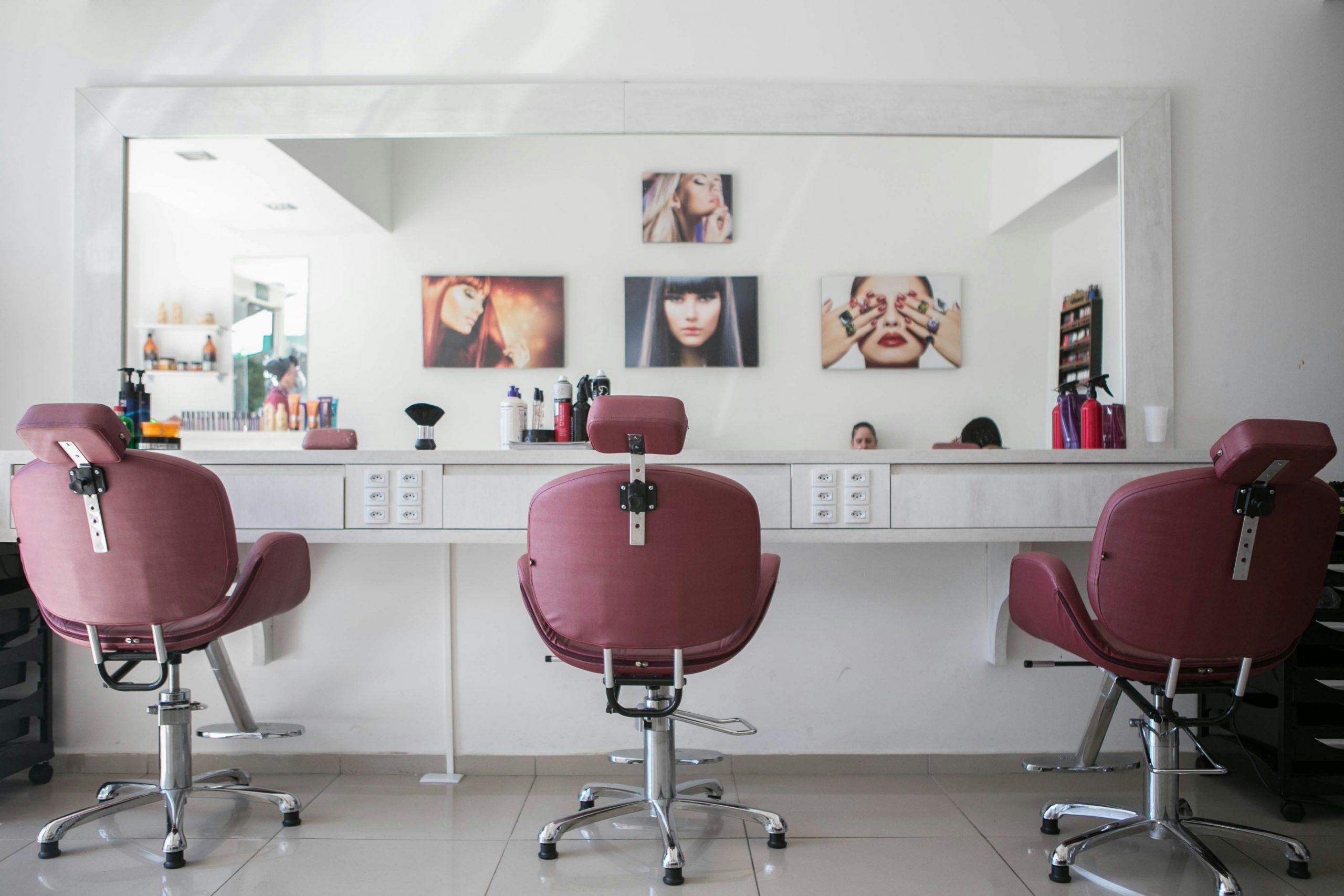
There’s a strong pull toward opening big. You picture the finished salon in your head, with every station full and a waiting area that looks like something out of a magazine, and it’s tempting to try to build that from day one. Resist that urge.
Almost every successful salon owner will tell you the same thing in hindsight: they wish they’d started smaller and scaled based on actual demand instead of guessing what they’d need. A two or three station setup is enough to prove your concept, build a client base, and generate the cash flow that funds your next phase of growth. You can always add chairs, add staff, and expand your square footage once you know what your business actually needs, rather than what you assumed it would need before you had a single paying client.
Starting small also protects you if something doesn’t go as planned. Client acquisition is slower than expected in month one? That’s a manageable setback in an $15,000 setup. It’s a much scarier problem in a $130,000 one.
Where to Actually Spend Your Money
Not every dollar in your budget carries the same weight. Some expenses directly affect the client experience and your ability to deliver quality service, while others are more about appearance or convenience. Knowing the difference is how you keep costs down without cutting corners in the places that matter.
Spend where clients feel it:
- Chairs, styling stations, and shampoo bowls that are comfortable and durable
- Quality tools for the actual services you’re providing, since worn-out equipment shows in the results
- Proper ventilation and sanitation setups, especially for nail services, since this is both a client-facing and a compliance issue
- A clean, well-lit space, even if it’s small
Spend less on:
- Decorative furniture and design flourishes that don’t affect the service itself
- Oversized retail displays before you have the retail sales volume to justify them
- Premium point-of-sale or software packages with features you won’t use in year one
- A large space when a smaller one would comfortably fit your station count
This is also where a lot of new owners underestimate a huge line item: the buildout. Plumbing and electrical relocation is consistently one of the most expensive parts of opening a salon, which is why choosing a space that already has some infrastructure in place, even if it’s not perfect, can save you tens of thousands of dollars compared to a raw commercial shell.
Licensing and Legal Costs You Cannot Skip
This is the part of the budget that isn’t optional, no matter how lean you’re trying to run. Every state requires salons to carry a cosmetology establishment license, and individual service providers need their own licensing as well. Skipping this step, or assuming you can handle it later, is one of the fastest ways to get shut down before you’ve even had a chance to build momentum.
Typical licensing and administrative costs to plan for include:
- State and local business licenses, which commonly range from a few hundred to a couple thousand dollars depending on your location
- Individual cosmetology or nail technician licenses for yourself and any staff
- Liability insurance to protect the business from claims
- Health department inspections, which happen regularly once you’re operating
- Business registration and any required permits specific to your city or county
If you’re in the process of starting your own cosmetology business, it helps to check your state board’s website early in the planning process, before you sign a lease or spend a dollar on equipment. Licensing timelines and requirements vary a lot by state, and building that timeline into your overall launch plan prevents a lot of last-minute scrambling and unexpected fees.
Renting Instead of Owning Equipment
Buying every piece of equipment brand new is one of the fastest ways to blow through a startup budget. It’s also often unnecessary, especially in year one when you’re still figuring out your exact service mix and client volume.
Consider these alternatives to a full new-equipment purchase:
- Gently used styling chairs and shampoo bowls from salons that are closing or upgrading
- Leasing arrangements for larger equipment, which spreads the cost over time instead of hitting your bank account all at once
- Booth or chair rental partnerships early on, where you share space costs with another provider until you’re ready to go fully independent
- Buying in phases, purchasing what you need for your opening station count and adding more as you add staff
A lot of salon supply companies also run seasonal promotions or offer bundled packages for new business owners, so it’s worth shopping around and comparing a few suppliers before committing to a full equipment order.
Building a Client Base Before You Have a Big Space

One underrated strategy for controlling startup costs is separating “building your client list” from “opening your dream space.” You don’t need a full salon to start booking clients and generating revenue.
Some owners start with:
- A single chair inside an existing salon, paying booth rent while they save toward their own space
- A home-based studio, which many states allow with proper licensing, cutting out commercial rent entirely
- A mobile setup for certain services, building a client base before ever signing a lease
This approach does two things. First, it generates income and proof of demand before you take on the biggest fixed costs of the business. Second, it gives you real data about your ideal client, your pricing, and your service mix, so that when you do open a standalone location, you’re building it around actual demand instead of guesswork.
Smart Marketing That Doesn’t Require a Big Budget
New salon owners often assume marketing means a big advertising spend, but some of the most effective client acquisition strategies cost very little.
Low-cost marketing tactics worth prioritizing:
- Building a simple, professional online booking presence so potential clients can find and book you easily
- Posting consistent before-and-after photos of your work on social platforms
- Asking happy clients for reviews and referrals directly, since word of mouth remains one of the strongest drivers in this industry
- Partnering with complementary local businesses, like boutiques or fitness studios, for cross-promotion
- Offering a modest new-client incentive to encourage first bookings, without discounting so heavily that it hurts your margins
The goal in the first year isn’t to have the flashiest marketing. It’s to have a reliable, repeatable way of filling your book that doesn’t require a large recurring ad spend you can’t sustain yet.
Planning for Cash Flow, Not Just Startup Costs
A lot of new owners budget carefully for the opening costs and then get blindsided by the first few months of operating expenses. Rent, utilities, product restocking, and any staff wages don’t pause while you’re building your client base, and revenue in month one rarely covers all of it.
Before you open, make sure your plan accounts for:
- Several months of operating expenses set aside as a cushion, not just your opening equipment and buildout costs
- A realistic ramp-up period for revenue, since most salons don’t hit full capacity immediately
- A clear breakeven estimate based on your actual pricing and expected client volume, not an optimistic best-case scenario
- A separate buffer for unexpected costs, since something almost always comes up that wasn’t in the original budget
This is really the difference between businesses that survive their first year and ones that don’t. It’s rarely the opening costs alone that sink a new salon. It’s running out of cash during the ramp-up period because the operating budget wasn’t part of the original plan.
Comparing the Two Paths Side by Side
Bringing this back to the two figures mentioned earlier helps illustrate just how much control you actually have over your own startup budget.
The lean path, in the $8,000 to $25,000 range, generally means:
- A small space, often under 1,000 square feet
- Two to three stations
- A mostly self-managed operation, at least at first
- A slower, organic growth strategy funded by early revenue
The traditional path, in the $60,000 to $150,000 range, generally means:
- A larger, more polished commercial space
- More stations available from day one
- Possibly some staff hired at launch
- A buildout involving plumbing and electrical work
Neither path is objectively better. A lean launch is lower risk and gets you generating income faster, which appeals to owners who want to prove the concept before committing more capital. A larger launch can support faster growth and a bigger initial client capacity for owners who already have a strong client base ready to follow them, or access to more startup capital. The point of looking at both numbers side by side isn’t to tell you which one to pick. It’s to show you that the range is real, the choice is yours, and neither end of that spectrum is the “correct” way to open a salon.
Common Mistakes That Drive Startup Costs Up Unnecessarily
Even owners who go in with a lean mindset sometimes end up overspending simply because nobody warned them about certain traps. Knowing what these look like ahead of time can save you thousands before you ever sign a lease.
A few of the most common ones:
- Falling in love with a space before running the numbers. It’s easy to sign a lease because a location feels right, without actually calculating what the plumbing and electrical work will cost to bring it up to salon standards.
- Overbuying inventory in month one. Stocking a full retail wall before you have consistent foot traffic ties up cash that could be used elsewhere, and a lot of product ends up sitting on shelves for months.
- Hiring too fast. Bringing on staff before your client base can support their hours means you’re covering payroll out of pocket rather than revenue, which drains your cash buffer quickly.
- Choosing every premium add-on for software and systems. Many booking and POS platforms offer tiered pricing, and it’s common for new owners to pay for features, like advanced marketing automation or multi-location tools, that they won’t need for years.
- Underestimating permit and inspection timelines. Delays in licensing can push back your opening date, which means you’re paying rent on a space that isn’t generating any revenue yet.
Avoiding these missteps isn’t about being overly cautious. It’s about spending your early capital on the things that actually move your business forward, instead of the things that just feel like progress.
Getting Started the Smart Way
Opening a salon without overspending really comes down to sequencing. Get your licensing sorted early, choose a space that doesn’t require a massive buildout, spend on the equipment and details clients actually notice, and hold off on the extras until your revenue can support them. Build your client base before you build your dream space if that’s what your budget calls for, and always plan for the operating costs that come after the ribbon-cutting, not just the costs that get you to opening day.
The range between a lean launch and a full buildout is enormous, and that’s the point. There’s no single right number to hit before you’re “ready.” There’s just the version of this business that matches where you are right now, with room to grow into the bigger version later.
