
Businesses that rely on hot water need a system that can keep up with daily demand. Restaurants, hotels, apartment buildings, health care facilities, schools and other commercial properties may use substantial amounts of hot water throughout the day. Choosing the right heating system can affect operating costs, performance and overall convenience.
A commercial gas water heater can provide several advantages for businesses that need dependable hot water. From fast heating to strong recovery rates, gas-powered systems may be a practical option for properties with significant hot water requirements.
Understanding these benefits can help property owners and facility managers determine whether this type of equipment fits their needs.
Providing Fast Water Heating
One of the primary advantages of gas-powered water heating is its ability to heat water quickly. Commercial properties may experience periods when multiple fixtures require hot water at the same time. A system that can recover quickly may help maintain a reliable supply during these busy periods.
Gas burners can produce substantial heat, allowing the unit to raise water temperatures efficiently. This can be especially useful for businesses that experience frequent demand throughout the day. Restaurants, for example, may need hot water for food preparation, dishwashing and cleaning, while hotels may have numerous guests using showers and sinks simultaneously.
The right equipment size is still important. A system that is too small may struggle to meet demand regardless of its fuel source. Proper sizing can help businesses select equipment capable of supporting their expected usage.
Supporting High-Demand Operations
Some commercial properties require significantly more hot water than a typical household. Businesses with numerous employees, customers, residents or guests can place considerable demands on their water-heating equipment.
A commercial gas water heater is often designed with higher-capacity applications in mind. Depending on the model, businesses may have access to larger storage tanks and strong recovery capabilities that can support periods of increased usage.
This can be beneficial for facilities such as restaurants, gyms, multifamily properties, and lodging establishments. Consistent access to hot water can help employees complete routine tasks while supporting customer and occupant comfort.
Offering Strong Recovery Rates
Recovery rate refers to how quickly a water heater can replenish its hot water supply after stored water has been used. This is an important consideration for commercial properties because hot water consumption can fluctuate throughout the day.
Gas-powered equipment can offer strong recovery performance because burners can transfer substantial amounts of heat to the water. When hot water demand is high, a strong recovery rate can help the system replenish its supply more quickly.
Businesses should consider both storage capacity and recovery performance when evaluating equipment. A large tank alone may not be enough for a property with consistently heavy demand. Matching the system’s capacity and recovery rate to actual usage patterns can help improve performance.
Potentially Reducing Energy Costs
Energy expenses are an important consideration for many businesses. Water heating can account for a significant portion of utility consumption, particularly in facilities with extensive hot water needs.
Natural gas and propane can provide efficient fuel options for water heating, depending on local energy prices, equipment efficiency, and operating conditions. A properly sized and maintained system may help a business manage its energy consumption more effectively.
However, operating costs vary from one property to another. Businesses should consider fuel prices, equipment efficiency, usage patterns and maintenance requirements rather than assuming gas will always be the least expensive option. Comparing available systems based on long-term operating expenses can provide a clearer picture of potential savings.
Supporting Consistent Hot Water Availability
A dependable hot water supply can be essential for daily business operations. Employees may need hot water for cleaning and sanitation, while customers, tenants, and guests may expect consistent access to heated water.
A properly selected and maintained system can help reduce interruptions caused by inadequate capacity or poor performance. Commercial properties can work with qualified professionals to evaluate their hot water demands and determine an appropriate system configuration.
Regular inspections can also help identify developing problems before they interfere with operations. Components such as burners, thermostats, connections, and safety controls may require attention over time. Following the manufacturer’s maintenance recommendations can support reliable performance.
Accommodating Different Commercial Properties
Gas water-heating equipment is available in various sizes and configurations. This gives businesses flexibility when selecting equipment for their particular facility.
A small business with moderate hot water needs may have different requirements than a large hotel or apartment complex. Factors such as the number of fixtures, peak usage periods, available installation space, and fuel availability can all influence equipment selection.
Businesses should also consider whether their existing gas supply and ventilation infrastructure can support the selected equipment. Installation requirements vary by model, so professional evaluation is important before purchasing or replacing a system.
Maintaining Equipment for Reliable Performance
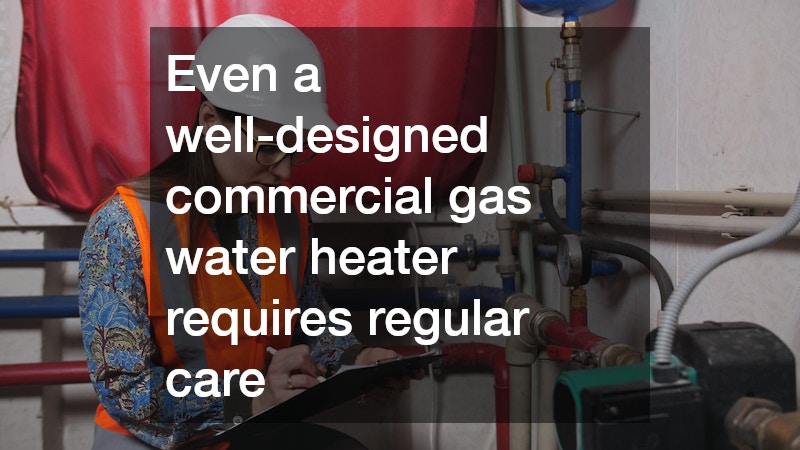
Even a well-designed commercial gas water heater requires regular care. Sediment buildup, worn components, and other issues can affect efficiency and performance over time.
Routine maintenance can help keep equipment operating properly and provide opportunities to identify potential concerns. Businesses should follow manufacturer guidelines and have qualified professionals handle inspections, repairs, and installation when appropriate.
Maintaining the surrounding area is also important. Equipment should have adequate clearance and ventilation as required by the manufacturer and applicable codes. Because gas appliances involve combustion, proper installation and ventilation are particularly important for safe operation.
For businesses with substantial hot water requirements, gas-powered equipment can offer fast heating, strong recovery rates, and reliable performance. These advantages may make it a practical choice for restaurants, hotels, multifamily properties, and other commercial facilities.
The best system depends on each property’s usage patterns, available fuel sources, space, budget, and future needs. Careful sizing, professional installation, and routine maintenance can help businesses get dependable performance from their water-heating equipment while managing long-term operating considerations.